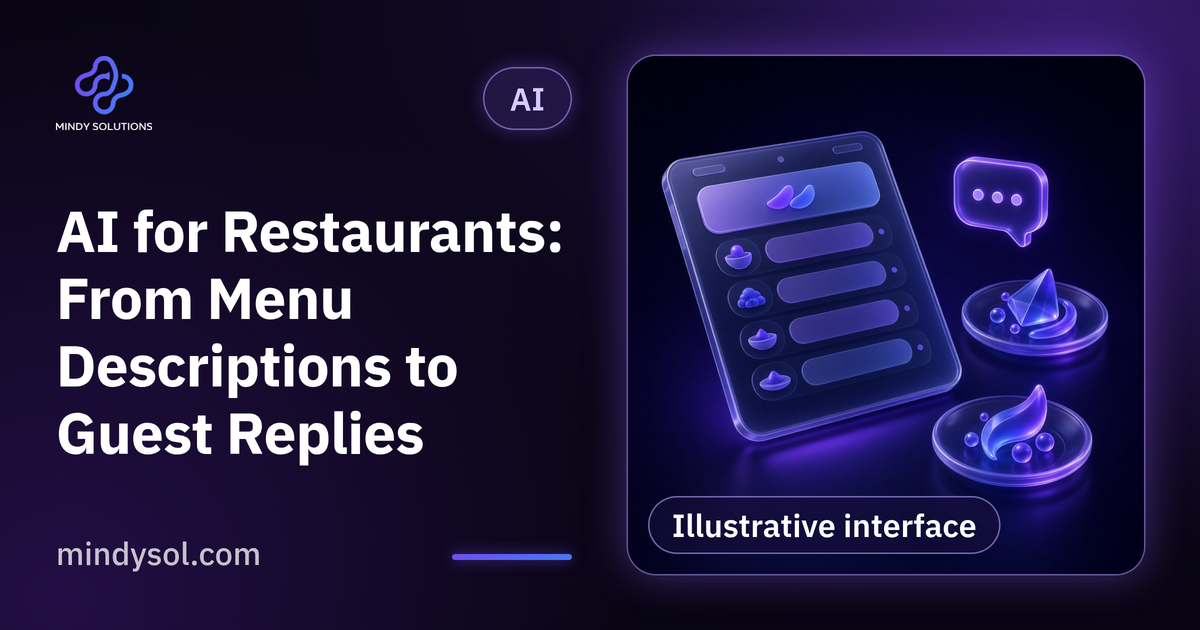
A restaurant owner's day is packed: kitchen, suppliers, staff, guests, social media and nonstop messages. Many tasks repeat: describing a new dish, answering "what are your hours?" for the twentieth time, writing a post for a new offer, reading scattered guest feedback. AI can lighten part of this load if it's used as an assistant under the team's review, not a replacement for the restaurant's character. At Mindy Solutions, here are practical uses and clear first steps from our experience.
Why restaurants?
Restaurants handle a lot of content and communication relative to team size: changing menus, seasonal dishes, daily posts, messages across channels and feedback from many places, while the team is busy running service. That makes repetitive tasks a good fit for AI assistance.
Use one: menu descriptions
Dish descriptions help guests choose, clarify ingredients and convey personality, but writing them for dozens of dishes takes time. AI can draft first versions from information you provide: ingredients, preparation, main flavors and desired tone.
Give accurate information
Real ingredients and preparation.
Set the tone
Upscale, family-friendly or casual.
Ask for several versions
Then choose or combine.
Review every description
The chef confirms accuracy.
Handle allergens carefully
Written and checked by the team.
Descriptions must be honest; a guest who orders based on a description and gets something different loses trust.
Bilingual menus
AI helps with first-pass translation, but literal translation of local dish names can sound odd. Sometimes it's better to keep the original name with a short explanation. Review both versions with someone fluent in both languages who understands the cuisine.
Use two: replying to recurring questions
The same questions arrive daily: hours, location, family seating, delivery options, vegetarian dishes. An assistant on your website or channels can answer from approved information at any hour, hand special requests and complaints to the team, tell guests it's automated and be updated whenever hours or menus change. It shouldn't promise table availability, special arrangements or exceptions; those stay with the team.
Use three: content ideas
AI can suggest ideas such as a dish's story, behind-the-scenes preparation, seasonal ingredients, team introductions and interactive questions, and draft captions. But photography should stay real: generated food images can give a misleading impression of your dishes.
Use four: reading guest feedback
Feedback arrives from comments, messages, surveys and staff conversations. AI can gather and categorize it by taste, service, delivery speed and atmosphere, highlighting recurring themes so management sees the full picture rather than the last comment read. AI organizes; the team understands and decides.
Use five: internal admin tasks
Meeting summaries
Clear notes from team meetings.
Work procedures
Drafts for prep, cleaning and receiving steps.
Training materials
Explaining the menu and service to new staff.
Message drafting
Well-phrased notes to suppliers or staff.
What AI isn't suited for
Kitchen decisions
Recipes and quality belong to the chef.
Sensitive complaints
These need direct human care.
Unreviewed allergen information
Accuracy is essential.
Fake dish photos
They damage trust.
Online ordering support
If the restaurant has an ordering website or app, an assistant can help guests choose by asking about party size, preferences and dishes they avoid, then suggesting items from the actual menu. This requires a well-organized menu with clear categories and accurate descriptions. The guest makes the final choice; the assistant only suggests.
Training the team
Give the team a short introduction to approved uses: what to ask the tool, how to review results and who approves before publishing. Document examples of good requests so usage stays consistent.
Your restaurant's voice
AI text can become generic. Write a short voice guide with words you use and avoid plus sample texts, use it with every request and review results with someone who knows the restaurant.
A library of good requests
Save requests that produced good results in a shared file, with a reviewed example output for each, so the team saves time and results stay consistent in style.
Getting started
Pick one task
Such as menu descriptions or recurring questions.
Prepare information
Accurate menu, hours, services and voice guide.
Pilot small
One menu section or one channel.
Review with the team
Adjust instructions.
Expand gradually
Once value is clear.
Common mistakes
Publishing without review
Wrong ingredient or hours information.
Generic text
The restaurant loses its voice.
Outdated assistant information
Answers that contradict reality.
Relying on it for complaints
Upset guests need a person.
AI solutions for restaurants with Mindy Solutions
At Mindy Solutions we help restaurants apply AI to the right tasks: preparing information and voice guides, building assistants for recurring questions and tools for organizing feedback, with human review at every step. We start by understanding your restaurant's working day and the tasks that consume your team's time, then suggest a suitable first step together. More details are on the solutions page of our website.
Frequently asked questions
Can AI write the whole menu?
It drafts; the team reviews accuracy and style before publishing.
Should I use generated dish photos?
Photographing your actual dishes keeps things honest.
Does the assistant answer every message?
It answers recurring questions from approved information and hands the rest to the team.
How do I keep my restaurant's style?
A clear voice guide and reviewing every text.
What's the first step?
One repetitive task, such as describing one menu section.
---
Our team specializes in these services. Get in touch so we can understand your business needs and suggest the right next step.
Our team specializes in these services. Get in touch so we can understand your business needs and suggest the right next step.
💬 Contact us