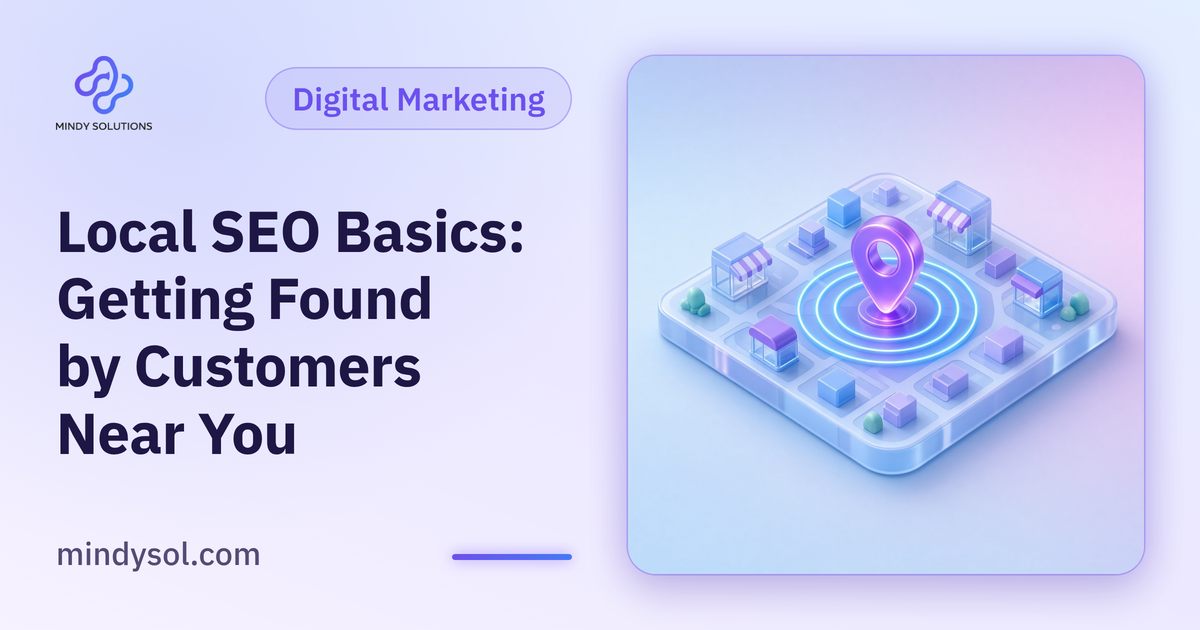
Picture someone standing two streets away from your shop, typing your service into their phone, and seeing a competitor across town instead. It happens every day, and the reason usually isn't the quality of your work. It's local SEO, or the lack of it. Local SEO is the set of steps that help search engines understand where you are and what you offer, so they can show you to nearby people at the moment they search. At Mindy Solutions we've written this guide for business owners who are new to the idea and want a clear place to start.
What local SEO is and who it's for
SEO in general means improving your site so it appears in search results. Local SEO focuses on searches tied to a place: when someone looks for a service near them, or adds a neighborhood or city to their search.
It matters for any business that serves customers in a particular area: clinics, restaurants, shops, service centers, maintenance and construction firms, property offices. If you have several branches, local SEO helps each one show up in its own area.
Step one: your business profile on map services
Searches with local intent often show a map pack at the top of the page, listing nearby businesses with their locations and reviews. Getting into that pack starts with a complete business profile on the map services your audience uses.
Complete every field
Name, address, phone, hours, the right category and your website. Missing details make your listing less visible and less convincing.
Add good photos
Clear shots of your storefront, interior and products or services help people recognize you when they arrive and signal the quality of your business.
Keep it current
Update hours for holidays and seasons, and add fresh photos or posts regularly. An active profile signals an active business.
Step two: consistent details everywhere
Your name, address and phone number should appear identically on your website, social profiles, business directories and map listing. Small inconsistencies, like spelling a district two different ways, can confuse search engines and erode trust.
Agree on one official format, store it somewhere your team can find it, and go back to older listings to bring them in line.
Step three: let your website talk about your location
A complete contact page
Your address in text, an embedded map, opening hours and contact options. Every local business needs one.
Pages for branches or service areas
If you have multiple branches or serve several areas, give each its own page with genuinely specific content, not a copy with the name swapped.
Mention places naturally
Reference your city or area in service pages and articles where it fits the context, without stuffing.
Step four: reviews and how you respond
Reviews are one of the first things people check before choosing a local business, and they also signal activity to search engines.
Invite happy customers to leave a review, politely and without pressure or incentives. Respond to every review: thank people for positive ones, and reply to negative ones calmly with an apology and an attempt to fix things. Never write or solicit fake reviews; they damage your reputation over time.
Step five: mobile experience and speed
Local searches tend to happen on phones, often when people are in a hurry or on the move. If your site is slow or awkward to use, they'll head straight back to the results and pick someone else.
Make your phone number tap-to-call, make directions easy to find and keep pages fast. Small details, but they decide the moment.
Step six: genuinely local content
Content that serves your community helps you appear in local searches and builds goodwill. Write about how your services suit the area, answer questions local residents ask, or share your involvement in neighborhood activities. Make it useful, not a list of place names; readers and search engines can both tell the difference.
Common local SEO mistakes
A neglected map profile
Outdated hours or a handful of old photos can send customers to a closed door.
Inconsistent addresses
Mismatched details confuse customers and search engines alike.
Ignoring negative reviews
Silence looks like indifference. A respectful reply turns a complaint into a chance to show you care.
Start today
Search for your service and area on your own phone and see what comes up. Is your business there? Are the details right? Do the photos make you want to visit? Then update your map profile, align your details and review your contact page. None of this needs a big budget, just steady attention, like tidying the shopfront every morning.
Frequently asked questions
Do I need a website for local SEO?
A map profile alone helps, but a clear website strengthens your visibility, gives customers more information and builds search engines' confidence in your business.
How long before local SEO works?
It depends on your area, competition and current setup. Local SEO is ongoing work, and its effects build over time.
Should I ask customers for reviews?
Yes, politely and without pressure or incentives. Never write or buy fake reviews.
How do I handle multiple branches?
Create a separate map profile for each branch and a dedicated page for each on your website.
Does local SEO help businesses that visit customers?
Yes. Maintenance and construction firms can set service areas in their map profile and create pages for the areas they cover.
---
Our team specializes in these services. Get in touch so we can understand your business needs and suggest the right next step.
Our team specializes in these services. Get in touch so we can understand your business needs and suggest the right next step.
💬 Contact us