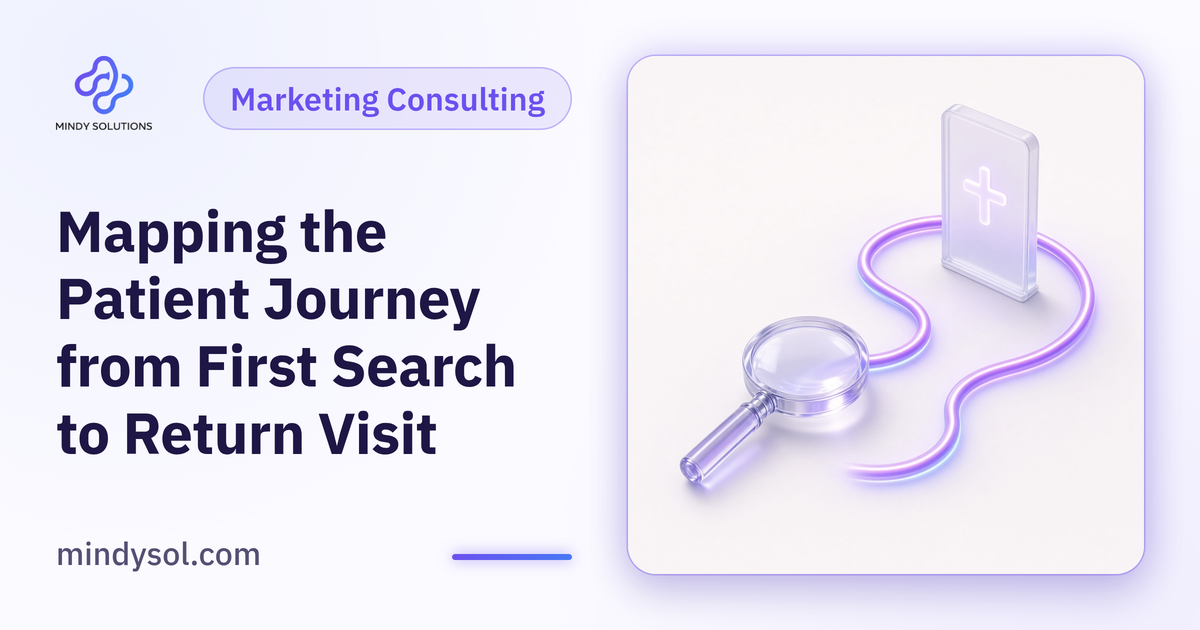
A patient's experience doesn't start at your reception desk, and it doesn't end when they leave the consultation room. It begins the moment they sense a need, and it runs through searching, comparing, asking, visiting and deciding whether to come back or recommend you. At every stage they can move closer to your clinic or drift away. Patient journey mapping lays all of those stages out in one view so you can see where things could be smoother. At Mindy Solutions we've built a simple framework you can use with nothing more than a whiteboard.
What a patient journey map is
It's a written sequence of the stages someone passes through, from first thinking about a service to becoming a regular patient. For each stage you note what the person does, how they feel and where they encounter your clinic.
The value is perspective. Processes that feel obvious to staff can be confusing to a first-time visitor, and a written journey surfaces those gaps calmly and concretely.
Stage one: recognizing a need and searching
What patients need
Clear, reassuring information about the service, nearby options and early signs of trust.
Where they meet you
Search results, your map listing, social profiles and blog content.
What to check
Do you appear when people search for your services locally? Does your content answer early questions in plain language?
Stage two: comparing options
What patients need
A clear picture of the service, the team and the space, plus practical details like location and hours.
What to check
Is the site easy on a phone? Do service pages explain what people need? Do photos show the real space?
Stage three: first contact
One of the most sensitive moments. The way a first message or call is handled can decide everything.
What patients need
A quick, friendly, clear reply and an easy next step.
What to check
How long do replies take? Are answers consistent across staff? Are inquiries logged in one place?
A CRM helps by collecting inquiries from different channels in one record, showing who has followed up with each prospective patient and when the next follow-up is due.
Stage four: before the visit
Between booking and arriving, people often wonder how to get there, what to bring and how long they'll wait. A clear, easy-to-find page on your website with the address and directions eases that uncertainty and shows the clinic is organized. Make sure the page is simple to open on a phone and linked from your map listing.
Stage five: the visit itself
Reception
A clear welcome, simple steps and an explanation of what happens next.
Waiting
A comfortable space and, where possible, a rough idea of the wait.
Wrapping up
Clear next steps and an easy way to get in touch if questions come up later.
Stage six: after the visit
Many clinics stop here, yet it's where loyalty forms. A patient who leaves at ease may return and recommend you; one left with an unanswered question may not.
A simple thank-you, helpful general content related to the service and a clear contact route keep the relationship warm. The aim isn't more messages; it's making patients feel the clinic is still there for them.
Why mapping pays off
A journey map turns vague impressions into specific improvements. Instead of saying patients seem unhappy, the team can point to a stage, such as slow replies to first messages or confusing directions, and fix it. It also aligns everyone around the patient: reception, marketing and doctors see the same picture and understand how their part affects the whole experience.
How to tell it's improving
After making changes, watch for simple signals: fewer repeated questions at reception, faster replies to inquiries, more patients returning for follow-ups. Ask the team what they notice, since they feel the difference first, and compare notes over time.
How to map the journey
Bring the team together
Reception, marketing and management each see a different part of the journey.
Lay out the stages
Six columns, with notes on actions, feelings, touchpoints and pain points under each.
Walk it yourself
Ask someone unfamiliar with the clinic to find and contact you as a new patient, then share honest notes.
Prioritize
Pick a few urgent fixes, start there, then move on.
Common mistakes
Focusing only on ads
Ads bring people into stage one; the whole journey decides whether they visit and return.
Neglecting the after-visit stage
The relationship continues after the patient leaves.
Mapping once
Clinics, teams and patients change. Revisit the map.
Collecting unnecessary data
Improving the journey doesn't require health information. Focus on clarity, speed, comfort and privacy.
Frequently asked questions
Is journey mapping useful for small clinics?
Yes, and often easier, because the team is small and communication is direct.
Who should take part?
Reception, marketing and management, with doctors joining for visit-day stages.
Do I need special software?
No. Paper or a spreadsheet is enough to begin, though a CRM helps organize inquiries and follow-up.
Which stage deserves the most attention?
First contact is especially sensitive, but a full map shows what your clinic specifically needs.
How often should we revisit it?
Periodically, and whenever something important changes, such as a new service, branch or inquiry process.
Does mapping require patients' health data?
No. It focuses on experience, communication and clarity, not health information.
---
Our team specializes in these services. Get in touch so we can understand your business needs and suggest the right next step.
Our team specializes in these services. Get in touch so we can understand your business needs and suggest the right next step.
💬 Contact us